Classical music in Leeds - venues, choirs and what to look out for
Where Leeds actually sounds best: the halls, chapels and ensembles worth planning around.
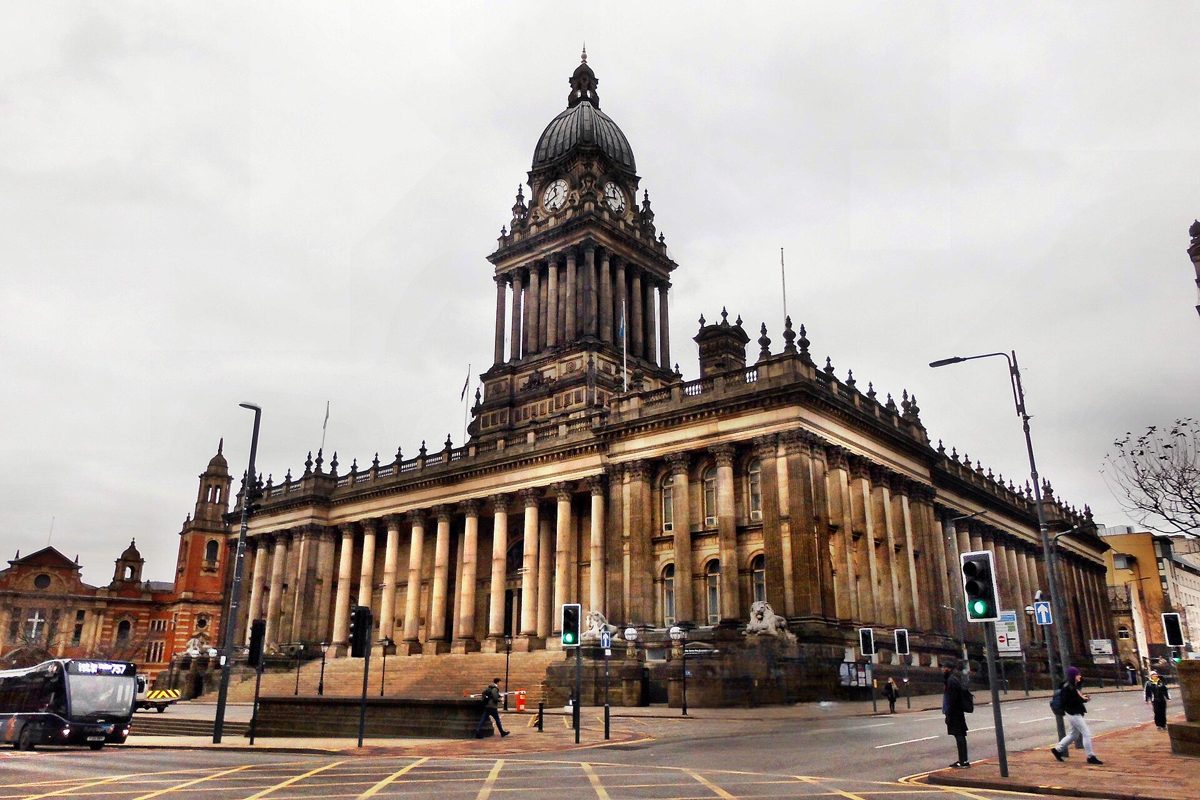
Leeds operates as a fundamental axis for classical music in the north of England. The city's infrastructure rests on several distinct pillars: the monumental Victorian architecture of Leeds Town Hall, the theatrical home of Opera North at the Leeds Grand Theatre, the chamber intimacy of the Howard Assembly Room, and the global focus brought by the Leeds International Piano Competition. Together these institutions provide a year-round calendar spanning orchestral warhorses, baroque rarities, contemporary chamber music, and solo recitals. The scene is compact, navigable, and deeply integrated into the city's civic identity.
Leeds Town Hall
Leeds Town Hall stands as the architectural and acoustic centerpiece of the city's classical music heritage. Opened in 1858 and designed by Cuthbert Brodrick, the building is a statement of Victorian civic pride, constructed of millstone grit and featuring a colonnaded frontage that dominates Millennium Square. The interior houses a vast performance space, flanked by an imposing organ built by Gray and Davison, later restored and modified by Wood Wordsworth. This organ remains one of the largest in England and dictates much of the hall's programming identity.
The acoustic of the main auditorium is famously resonant. The high barrel-vaulted ceiling and hard surfaces create a long reverberation time that favors sustained, harmonic density over rhythmic clarity. This makes the hall an ideal vehicle for large-scale Romantic and post-Romantic symphonies. The hall serves as the primary concert venue for the Leeds International Concert Season, bringing major touring orchestras to the city. It also hosts the Leeds Festival Chorus and acts as a regular touring stop for the Hallé Orchestra and the BBC Philharmonic. Programs here lean heavily on the grand canon: Mahler symphonies, Elgar, Brahms, and large-scale choral works like Handel's Messiah. The sheer volume of sound generated by a full symphony orchestra in this room is a defining part of the listening experience.
Opera North at the Leeds Grand Theatre
Opera North is the premier opera company in the north of England, operating as a major touring ensemble with its primary performance base at the Leeds Grand Theatre. The Grand Theatre, opened in 1878, is a traditional Victorian proscenium-arch theatre. Unlike modern auditoriums, the Grand Theatre features deep balconies and heavily ornamented plasterwork on the ceiling and walls. This ornamentation provides excellent acoustic diffusion, meaning the sound of a singer's voice scatters evenly throughout the space. The acoustic is relatively dry compared to Leeds Town Hall, providing the vocal clarity required for opera while still supporting the pit orchestra.
Opera North utilizes this space for its mainstage productions. The company is known for its ambitious, sometimes provocative stagings of both standard repertoire and lesser-known works. A typical season includes a mix of popular Verdi and Puccini alongside ambitious modern revivals and contemporary commissions. The intimacy of the Grand Theatre allows for dramatic nuance; the sightlines from the upper levels are steep, bringing the audience close to the stage action. The orchestra performs from a pit situated below the stage, and the acoustic balance between the singers and the instrumentalists is carefully managed to suit the specific demands of each production. Opera North also performs at the Leeds Grand Theatre for its semi-staged concert performances, often expanding its repertoire to include works that require a larger symphonic orchestration than a standard pit allows.
The Howard Assembly Room
Located directly above the Leeds Grand Theatre, the Howard Assembly Room serves as the studio and chamber space for Opera North. Originally the rehearsal room for the theatre, the space was converted into a dedicated performance venue. The room is a narrow, elongated rectangle with a high ceiling, featuring a flexible seating arrangement that can be reconfigured depending on the event. The acoustic is clear, immediate, and unromantic, designed for precision and transparency rather than sonic bloom. This makes it the premier venue in Leeds for early music, contemporary chamber music, and solo recitals.
The programming at the Howard Assembly Room is highly curated and acts as a complementary, smaller-scale alternative to the mainstage opera. It hosts the Opera North chamber orchestra and features regular visits from early music specialists playing period instruments. The room is particularly well-suited for the intricate counterpoint of Baroque chamber music, where the dry acoustic allows the audience to hear the distinct lines of a viola da gamba or a harpsichord without muddying the harmony. It also hosts contemporary string quartets, experimental vocal recitals, and small-scale contemporary opera. The proximity of the performers to the audience creates an intense, focused listening environment that contrasts directly with the grandeur of the Town Hall.
The Leeds International Piano Competition
The Leeds International Piano Competition is a triennial event that fundamentally alters the classical music landscape of the city when it occurs. Founded in 1961 by Marion Thorpe, Fanny Waterman, and the Leeds City Council, the competition has established itself as one of the most prestigious piano competitions globally. The event brings young pianists from around the world to compete in a grueling series of rounds, culminating in a grand final with full orchestra. The competition has historically been a launchpad for major international careers, counting Radu Lupu, Murray Perahia, and Federico Colli among its past winners.
The competition utilizes the acoustic of Leeds Town Hall for its final stages. The specific challenge for the competitors is projecting their sound through the dense reverberation of the Victorian hall. A pianist must carefully manage pedaling and articulation to ensure fast passages do not blur into an indistinct mass of sound. The repertoire for the competition is demanding, requiring competitors to perform solo recitals, chamber music, and a major concerto. The competition is not just a static event; it acts as a focal point for piano masterclasses, outreach programs, and recitals across the city. The Leeds International Piano Competition provides a concentrated burst of high-level piano performance, drawing international audiences and critics to assess the next generation of keyboard artists.
Navigating the Leeds Classical Calendar
Understanding the interplay between these venues is key to experiencing the full breadth of classical music in Leeds. The scene is not centralized in a single arts complex but distributed across a few key civic and theatrical buildings. A typical season requires moving between the monumental scale of the Town Hall and the intimate focus of the Howard Assembly Room. The Grand Theatre sits in the middle, providing a dedicated proscenium environment for fully staged opera. The Leeds International Piano Competition operates as a periodic overlay, transforming the Town Hall into an intense competitive arena every three years.
The character of the city's classical music offering is defined by these architectural and acoustic contrasts. The same organization, Opera North, operates both the Grand Theatre and the Howard Assembly Room, offering a comprehensive range of scale and style. The Town Hall operates independently, relying on touring orchestras and local choral societies to fill its vast acoustic. The distinct acoustic profiles of these spaces dictate the repertoire performed within them. A listener seeking the clarity of a Bach partita will find it in the Howard Assembly Room, while a listener seeking the overwhelming sonority of a Mahler symphony will find it at the Town Hall.
Programming Nuances and Local Listening Habits
The local classical music audience in Leeds is accustomed to a high standard of performance and a specific type of programming dictated by the venues. The reliance on the Town Hall for orchestral music means the city has a strong tradition of choral singing. The Leeds Festival Chorus, a large amateur choir, frequently performs alongside professional orchestras in this space. The sheer volume of the chorus is necessary to balance a full symphony orchestra in the highly reverberant Town Hall. This creates a local preference for large-scale choral works, particularly during the autumn and winter months.
Opera North's presence provides a year-round anchor for the city's classical calendar. The company's tendency to pair standard repertoire with more challenging works allows local audiences to experience a wide range of operatic styles. The Howard Assembly Room supplements this with a focus on specific instrumental and vocal niches. The room is a regular stop for touring early music groups, providing a venue where period instruments can be heard without the acoustic interference of a larger hall. The local listening habit involves selecting venues based on the desired acoustic and scale of the performance, rather than simply following a particular ensemble. The following list outlines the primary acoustic and programming distinctions: Leeds Town Hall: Large-scale Romantic symphonies, choral masterworks, and organ recitals requiring a long reverberation time. Leeds Grand Theatre: Fully staged grand opera, standard repertoire from Verdi to Puccini, and semi-staged concert performances requiring dramatic clarity. Howard Assembly Room: Baroque chamber music, contemporary string quartets, experimental vocal works, and solo recitals demanding acoustic transparency. Leeds International Piano Competition: High-stakes solo and concerto performance, specifically testing a pianist's ability to project through the dense acoustic of Leeds Town Hall.
Frequently asked questions
What is the difference between attending a performance at Leeds Town Hall and the Howard Assembly Room?
Leeds Town Hall is a massive Victorian concert hall with a long reverberation time, designed to project the sound of a full symphony orchestra and large chorus to an audience of over a thousand. The acoustic emphasizes volume and sustained harmony, making it ideal for Romantic repertoire. The Howard Assembly Room is a small, elongated chamber space with a dry, clear acoustic. It is designed for solo recitals, early music, and contemporary chamber music where rhythmic clarity and the distinct separation of musical lines are essential. The scale and acoustic treatment of the two spaces dictate entirely different listening experiences and repertoire.
How does Opera North utilize both the Leeds Grand Theatre and the Howard Assembly Room?
Opera North uses the Leeds Grand Theatre as its primary venue for fully staged, mainstage opera. The theatre provides a traditional proscenium arch, a pit for the orchestra, and the necessary backstage infrastructure for large-scale theatrical productions. The Howard Assembly Room, located in the same building, is used for smaller-scale, experimental, and chamber performances. This includes recitals by the Opera North orchestra, small-scale contemporary opera, and early music performances. The two venues allow the company to present a wide spectrum of repertoire, from grand Puccini to intimate chamber works, within a single organizational structure.
What makes the Leeds International Piano Competition unique to the city?
The Leeds International Piano Competition is unique because it is a triennial event that transforms Leeds Town Hall into an international arena. The competition requires pianists to perform a demanding range of solo and concerto repertoire. The specific acoustic of Leeds Town Hall presents a significant challenge to the competitors, who must carefully manage their pedaling and articulation to prevent the dense reverberation from blurring fast passages. The competition brings a concentrated period of international focus to Leeds, drawing audiences and critics to assess the technical and musical capabilities of the next generation of concert pianists in a venue known for its demanding acoustic.
This is an independent member's guide compiled by Leeds Society. We are not affiliated with the venues and institutions mentioned; opening arrangements and programmes change - always confirm details on the official websites before making plans.
← Back to Events