A cultural weekend in Leeds - the member's itinerary
Two well-planned days of art, music, architecture and food in Leeds - an itinerary built around real landmarks.
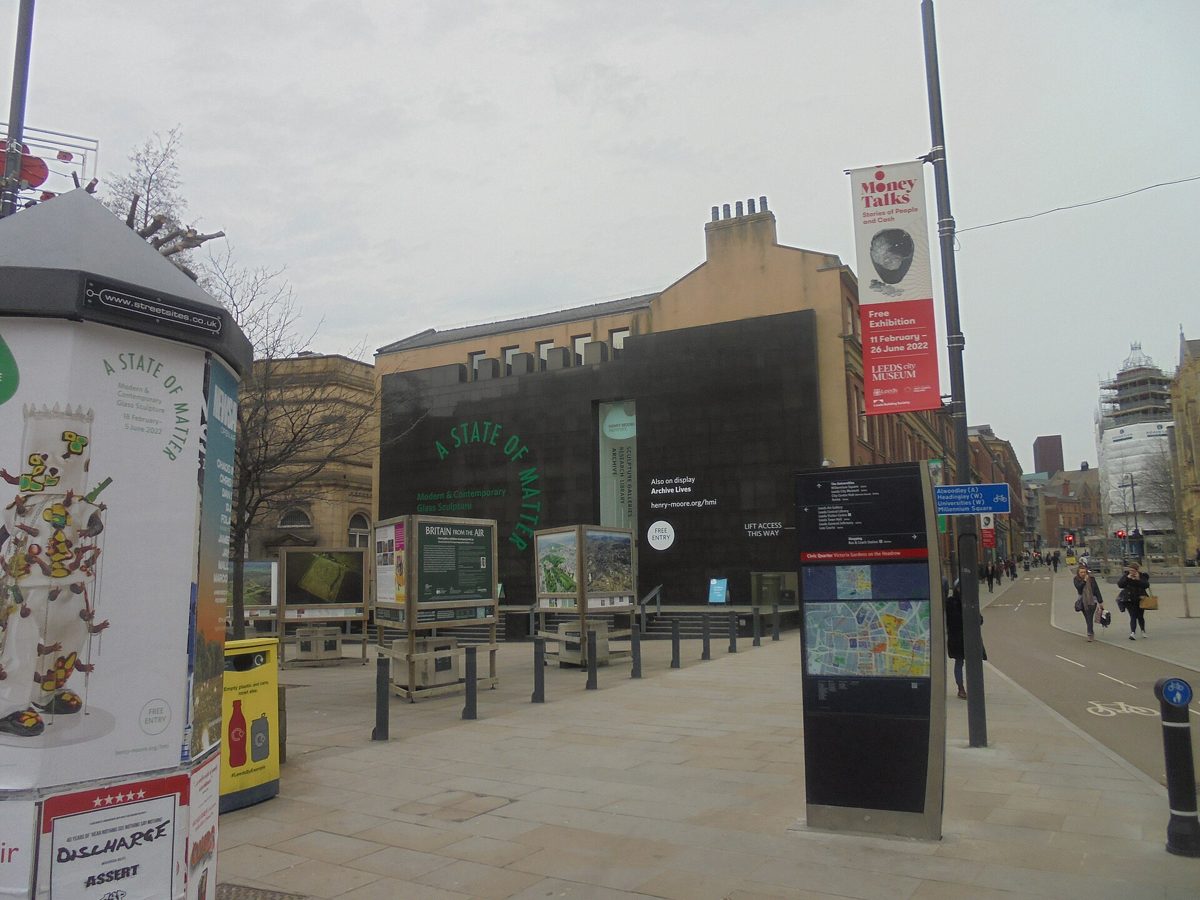
Leeds is a city that wears its industrial past on its sleeve and pairs it with an unshakeable creative confidence. This itinerary skips the generic shopping centres and chains to focus on the architectural Victoriana, independent galleries, and food halls that make the place hum. You will cover serious museum collections, a Victorian market that still feels like the city's heartbeat, and a music scene embedded in old mills and railway arches. Think of this as a brisk, two-day masterclass in West Yorkshire's cultural capital, mapped so you never waste a step.
Saturday Morning
Start at Leeds Art Gallery on The Headrow. The building itself is a late Victorian statement with a glass-roofed central court, but the real draw is the permanent collection of twentieth-century British painting. You get Francis Bacon's distorted, screaming figuration right next to the heavy, industrial forms of Henry Moore. Bacon's "Head VI" (1949), with its trapped figure howling behind papal purple drapes, hangs in the same room as Moore's bronze maquettes for the UNESCO reclining figure. The gallery holds the best collection of Moore's sculpture outside London, and the white-tiled Tiled Hall Café, a restored Victorian library turned tea room, is the only acceptable spot for a flat white before you continue. The gallery's connection to the Leeds Sculpture Institute means the curation feels genuinely academic, not just crowd-pleasing. Look for Jacob Kramer's "Day of Atonement" (1919), a visceral portrait of the artist's father that captures the city's Jewish immigrant experience through angular, modernist brushwork.
Walk east to Kirkgate Market, a five-minute stroll from the gallery. This is not a sanitised food hall. The wrought-iron structure, dating from 1904, is one of Europe's largest covered markets and the birthplace of the Marks & Spencer penny bazaar in 1884. Michael Marks opened his stall here with the slogan "Don't ask the price, it's a penny," and the original stall is marked by a blue plaque near the clock. The mosaic butchers' signs and the game dealers on Butchers Row are the first things that hit you. Find the fish game aisle and you'll notice how the air changes, salty and cold. Grab a Yorkshire scotch egg from Wilson's Farm and eat it standing up near the old tiled clock, because sitting down is a waste of time here. The market's outer halls spill onto Vicar Lane, where the 1857 Corn Exchange dome dominates the view, a structure that embodies Leeds's grain-trading wealth in every brick.
Saturday Afternoon
From the market, head south across the river to the Royal Armouries Museum at Clarence Dock. The building is a glass-fronted fortress designed by Derek Walker, and the collection is the national arsenal of Britain, moved here from the Tower of London in 1996. The Hall of Steel, a giant glass case packed with 3,000 weapons arranged in a geometric pattern, is the visual hook. The real power is in the tournament galleries and the Japanese armour section. You can study a full samurai suit from the Edo period, complete with its lacquered cuirass and silk lacing, next to Henry VIII's personal foot-combat armour, which weighs nearly 100 pounds and still bears the dents from tournament blows. The museum stages live combat demonstrations and falconry displays in the central arena, which sound touristy but are genuinely instructive about weight, balance, and medieval fighting technique. The staff who handle the weapons are historians, not actors, and they explain the difference between a broadsword's cutting arc and a rapier's thrust with proper precision. On a recent visit, a handler named Tom demonstrated how a 15th-century pollaxe could hook a knight's leg and pull him off a horse, using a volunteer from the audience.
If the weather holds, walk back along the Leeds-Liverpool Canal towpath to Granary Wharf. This is a cluster of brick warehouses turned into independent bars and cafes, with the dark water of the canal lock reflecting the railway arches above. It is the best spot for a pint of Saltaire Blonde at the Water Lane Boathouse, where you sit outside on the cobbles and watch the narrowboats navigate the lock. The sound of water rushing through the gates and the clink of masts against the brick walls is the city's most underrated soundtrack. The canal opened in 1816 and transformed Leeds into a trading hub; the wharf buildings once stored grain, wool, and coal before their current life as bars and apartments.
Saturday Evening
Dinner should happen in the Call Lane and Lower Briggate district. This stretch of Victorian shopfronts and hidden courtyards is the city's main artery for food and later music. The Reliance on North Street is a stripped-back gastropub with a chalkboard menu that moves from charcuterie to proper braised lamb, but the room feels like a French workers' canteen. For something more raucous, head to the Belgrave Music Hall, a three-floor operation with a canteen, a roof terrace, and two event suites. The roof is covered but unheated, so you look out over the city's rooftops and the dome of the town hall while eating a slice from Dough Boy's. The Belgrave's programming is the heart of Leeds's independent scene, with live bands, film screenings, and DJs that span dub, northern soul, and electronica. In 2013, the venue hosted a secret set by The Cribs that packed the 300-capacity room to the point of sweating walls.
If live music is the goal, the Brudenell Social Club in Hyde Park is the city's most legendary venue. It is a working men's club that has hosted everyone from Franz Ferdinand to the Wedding Present. The room is low-ceilinged, the beer is cheap, and the sound is shockingly good for a space that still has a darts board and a portrait of the Queen. The Wedding Present's David Gedge grew up in Leeds and played the Brudenell so often in the early 1990s that the club's manager, Mike, still keeps a framed setlist from their 1992 gig behind the bar. Check what's on and grab a ticket at the door. The Brudenell is a 15-minute bus ride from the city centre, but the journey is part of the pilgrimage. A closer option is the Wardrobe, a basement jazz bar and restaurant on St. Peter's Square that books funk, soul, and Afrobeat acts. The low vaulted ceiling and the tightly packed tables make it feel like a private club. The venue hosted a surprise set by the Leeds-born jazz saxophonist Courtney Pine in 2022, drawing a crowd that spilled onto the pavement.
Sunday Morning
Get breakfast at Laynes Espresso on New Station Street. This is a tiny, serious coffee shop that roasts its own beans and does a sourdough toast with avocado and poached eggs that is a local institution. The space is narrow and you will queue, but the espresso is the cleanest in the city. From there, walk to the Leeds Industrial Museum at Armley Mills. This is a massive former woollen mill on the River Aire, and it is the most under-visited gem in the city. The museum walks you through the full process of textile production, from the raw fleece to the finished cloth, with working machinery that still clatters and roars. The spinning mules and the carding engines are original, and the noise they make is a physical reminder of why Leeds became a Victorian powerhouse. The site also holds a collection of early cinema projectors and a small cinema that screens silent films with live piano accompaniment. The connection between industrial innovation and the birth of moving images runs deep here: Louis Le Prince, who shot the first moving pictures in Leeds in 1888, was a friend of the mill owners. The museum's projection room shows his 2.11-second film "Roundhay Garden Scene" on a loop.
If the Armley Mills feels too heavy, the alternative is the University of Leeds campus and its public sculpture trail. The campus is home to the Stanley & Audrey Burton Gallery, a small but focused collection of European painting, including a striking group of Bloomsbury Group works. The real hit is the outdoor Henry Moore collection, scattered across the green spaces near the Parkinson Building. Moore was a student at the Leeds School of Art, and the reclining figures here are among his most direct works. The campus also houses the Treasures of the Brotheton Gallery, which rotates its display of rare books and manuscripts, including a Gutenberg Bible leaf and letters from the Brontë family. The link between the city's industrial wealth and its patronage of the arts is visible everywhere. In the Brotheton, you can see a manuscript letter from Charlotte Brontë dated 1844, written from Haworth, discussing the publication of her poems under the pseudonym Currer Bell.
If you prefer markets over galleries, circle back to Kirkgate Market for the Sunday car boot section, where the outer rows fill with vintage clothing, vinyl, and old furniture. The stalls here are run by collectors who know their stock, and you can find a first pressing of a Joy Division 7-inch next to a 1960s leather jacket. The market is quieter on Sunday, and the afternoon light through the glass roof makes the tiled details pop.
Where to eat Sunday lunch The Reliance on North Street serves a roast with a proper Yorkshire pudding and a wine list that leans natural and biodynamic. The beef comes from the Yorkshire Dales and the horseradish is freshly grated. Bundobust on Mill Hill is an Indian street food operation in a basement bar, where the okra fries and the vada pav are the best in the city. The beer list is entirely craft, and the music is always loud. The okra fries are coated in chickpea batter and fried until they shatter, served with a tangy tomato chutney. The Cross Keys on Water Lane is a Victorian pub with a tiled exterior and a roaring fire, serving a roast that is huge, slow-cooked, and served with a straight face by staff who have worked there for decades. The Yorkshire pudding rises to a golden dome, and the gravy is made from the meat juices with a dark, almost sweet depth.
Frequently asked questions
Can I walk everywhere, or do I need public transport?
The city centre is compact and flat. The walk from Leeds Art Gallery to Kirkgate Market takes ten minutes, and the route from the market to the Royal Armorries via the river is a thirty-minute stroll. The only journey you might want a bus for is the Brudenell Social Club, which is a fifteen-minute ride from the Headrow on the number 56. The train station is a five-minute walk from the city centre, and the canal towpaths connect the Armorries to Granary Wharf without touching a road.
Is Kirkgate Market open on Sundays?
The main indoor market is closed on Sundays, but the outdoor and semi-covered sections run a car boot and vintage market from early morning until mid-afternoon. The fish and meat halls are shut, but the independent cafes and the plant sellers are active. For the full market experience with butchers, fishmongers, and the full roar of the crowd, plan to visit on Saturday morning, ideally before 11am.
What is the dress code for Leeds's music venues and restaurants?
Leeds is a northern city with a university town's heart, and the dress code is consistently casual. The Belgrave and the Brudenell accept jeans and trainers without question. The only place where you might feel underdressed in a T-shirt is the restaurant at the Queens Hotel, but even that is a stretch. The general rule is that a clean pair of trainers and a decent jacket will get you into any bar, club, or restaurant in the city. The weather is the real factor: a waterproof layer is essential because the canal and the river mean damp air year-round.
This is an independent member's guide compiled by Leeds Society. We are not affiliated with the venues and institutions mentioned; opening arrangements and programmes change - always confirm details on the official websites before making plans.
← Back to Events