The best museums and galleries of Leeds - a member's guide
A curated member's guide to Leeds's essential museums and galleries: what to see, when to go and what locals skip.
A curated member's guide to Leeds's essential museums and galleries: what to see, when to go and what locals skip. Leeds has quietly assembled one of the most interesting clusters of museums and galleries in the north of England, spread across a walkable city centre and a few acres of parkland. The civic art collection is genuinely significant, the armoury is a national institution, and the social history museums are properly curated rather than tokenistic. This guide covers the institutions that reward repeat visits, with notes on what makes each collection distinct and how to approach them without the crowds.
Leeds Art Gallery
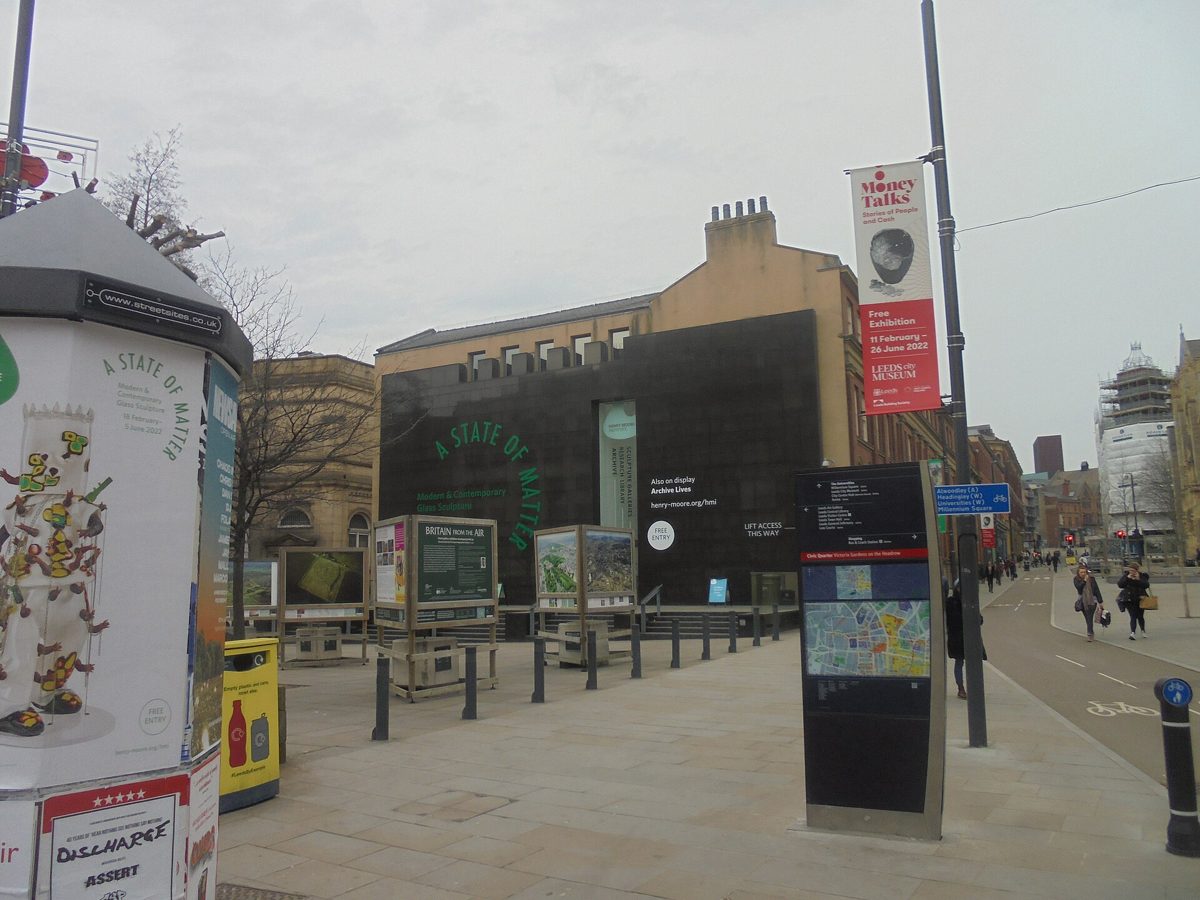
The permanent collection at Leeds Art Gallery is the best collection of twentieth-century British art outside London, and that is not local boosterism. The gallery holds major works by Francis Bacon, Stanley Spencer, Henry Moore, Barbara Hepworth, Paula Rego, Bridget Riley, and Eileen Agar. The Moore and Hepworth holdings are particularly strong, which makes sense given that both artists were born in the region. Moore gifted a substantial body of work to the gallery, and the adjoining Henry Moore Institute, a separate research centre and sculpture gallery, extends the conversation into three-dimensional work across centuries.
The Victorian galleries upstairs are worth the climb alone. You will find Atkinson Grimshaw's nocturnal dockside scenes, pre-Raphaelite pieces by Holman Hunt and John William Waterhouse, and the enormous John Atkinson Grimshaw oil "November Gold," which captures a specific Leeds street in autumn with a photographic precision that still unsettles. The contemporary programme is uneven but occasionally excellent, with the gallery hosting the Northern Art Prize in past years and maintaining a rotating exhibition schedule that has included Rachel Maclean and Sonia Boyce.
The Tiled Hall Cafe, shared with the neighbouring Leeds Central Library, is one of the most architecturally striking places to eat in the city, a Victorian barrel-vaulted hall with Burmantofts faience tiles and a glass roof. It is worth visiting even if you skip the galleries, though you should not skip the galleries.
Entry is free. Weekday mornings, particularly Tuesday and Wednesday, are quietest. The gallery is closed on Mondays. The Henry Moore Institute next door operates on the same schedule and is also free.
Royal Armouries Museum
The Royal Armouries is one of the three arms of the national collection, alongside its sister sites at the Tower of London and Fort Nelson in Portsmouth. The Leeds site, opened in 1996, was a deliberate relocation of the collection to a purpose-built museum on the Clarence Dock waterfront, and it houses the bulk of the national armoury that could not be displayed in London.
The permanent galleries are organised thematically rather than chronologically: War, Tournament, Oriental, Self-Defence, and Hunting. The Oriental gallery contains one of the largest collections of Japanese armour and weaponry outside Japan, including a full set of Edo-period samurai armour, several katana blades, and a rare elephant armour from Mughal India that is precisely the sort of object you do not forget. The Hall of Steel, a towering glass atrium lined with over 2,500 items of arms and armour arranged in a continuous spiral, is the museum's architectural centrepiece and a genuine feat of display design.
The museum runs live demonstrations in the outdoor arena and in the main galleries, including jousting in summer and falconry displays. The arms and armour handling sessions, where staff let you hold actual medieval weaponry, are more engaging than they sound. The collection has depth if you are interested in military history, but it also works as a straightforwardly impressive display of craftsmanship across cultures.
Entry is free. Weekends are busy, especially during school holidays, and the jousting events draw crowds. Mid-week afternoons, particularly Wednesday or Thursday, tend to be quieter. The museum is open daily.
Leeds City Museum
Leeds City Museum occupies the former Mechanics' Institute building on Millennium Square, a grand Victorian structure that was rebuilt after a fire and reopened as the city museum in 2008. The collection is eclectic in the best civic museum tradition: natural history, archaeology, Ancient Worlds, and Leeds social history under one roof.
The natural history gallery includes a full skeleton of a Leedsichthys, a giant Jurassic fish named after the city where its fossils were first discovered, and a collection of taxidermy that ranges from the majestic to the frankly melancholic. The Ancient Worlds gallery has a genuine Egyptian mummy, Nesyamun, a priest from the 11th century BCE whose coffin and remains have been in the city's collection since the 1820s. The 2019 research project that digitally reconstructed his voice made international news.
The Leeds Story gallery is where the museum earns its keep, tracing the city from its medieval market town origins through the industrial revolution, the tailoring trade, and the waves of migration that shaped the modern city. It does not sugar-coat the poverty and exploitation of the Victorian era, and the sections on Jewish, Irish, and South Asian communities are specific and detailed rather than hand-waving.
Entry is free. The museum is closed on Mondays. Saturday mornings are surprisingly manageable if you arrive at opening time; Sunday afternoons are busiest.
Kirkgate Market
Kirkgate Market is not a museum in the traditional sense, but it is the single most important historical site in Leeds and it belongs on any cultural guide to the city. Opened in 1857, it is one of the largest covered markets in Europe, and the grand Victorian hall designed by John and Joseph Leeming is an architectural landmark of ironwork, glazing, and glazed brick.
This is where Marks & Spencer began. Michael Marks opened his Penny Bazaar in 1884, and the original stall, marked with a heritage plaque, is still visible in the market hall. The market is a working trading space with over 400 stalls selling produce, fish, meat, fabric, and street food, but it is also a living document of the city's commercial and social history. The butchers' row, with its tiled fronts and hanging game, has been operating continuously for over 150 years.
The 1976 hall is a rare surviving example of a Victorian market that still fulfills its original function. The current redevelopment plans have been controversial, and the market's future is a live conversation in the city, which makes visiting it now a relevant act of civic engagement as much as a cultural one.
The market is free to enter. It is open Monday through Saturday, with the busiest trading on Fridays and Saturdays. The market hall can be overwhelming on a Saturday afternoon; a Tuesday morning is the time to walk through with a coffee and actually look at the architecture and the stall details without being jostled.
Thackray Museum of Medicine
The Thackray Museum of Medicine sits just outside the city centre, adjacent to St James's University Hospital, and it is a remarkably frank and well-designed museum of health and medical history. It reopened in 2021 after a major redevelopment, and the galleries trace the history of medicine from the Victorian era to the present, with a particular focus on the Leeds connection.
The collection includes over 47,000 medical objects, from amputation saws and early X-ray machines to the first hip replacement components developed by Sir John Charnley, a Leeds orthopaedic surgeon whose work changed orthopaedics globally. The Victorian street gallery recreates a Leeds slum of the 1840s, complete with the smells, and it is one of the more immersive and genuinely unsettling historical exhibits in the country. The disease and treatment galleries are direct about mortality, infection, and the limits of medicine, which makes the progress sections feel earned rather than triumphalist.
The museum is not free, but the entry fee is reasonable and the experience justifies it. The museum is quieter on weekday afternoons, and the cafe is better than most museum cafes in the region.
Abbey House Museum
Abbey House Museum is the Thackray's companion piece, operated by Leeds Museums and Galleries and located in Kirkstall, opposite the ruins of Kirkstall Abbey. It is a social history museum built around a fully recreated Victorian street, with shops, a pub, and houses furnished to the period, based on original Leeds streets and businesses.
The street is the main draw, and it is meticulously done. The individual shopfronts are based on real Leeds businesses, and the attention to detail in the window displays, the stock, and the signage is the work of decades of curatorial effort. The upper galleries house rotating exhibitions, often drawing on the museum's massive collection of childhood and domestic artefacts. The recent exhibitions on toys, on Leeds during the war years, and on the history of the city's pubs have been carefully researched and well presented.
The museum is in the middle of Kirkstall, which means you can combine it with a walk around the abbey ruins, which are managed by Leeds City Council and free to visit. The abbey is a Cistercian monastery founded in 1152, and the surviving architecture is substantial enough to give a real sense of scale.
Admission is not free, but it is modest. Weekday mornings are quietest. The museum is closed on Mondays.
Temple Newsam House
Temple Newsam is a Tudor-Jacobean mansion set in 1,500 acres of parkland designed by Capability Brown, about four miles from the city centre. The house is one of the most important historic houses in the North, with a collection of fine and decorative arts that Leeds City Council has been building since the 1920s.
The Chippendale collection is the headline. Thomas Chippendale was born in Otley, a few miles from Leeds, and Temple Newsam holds the largest public collection of his furniture in the world. The pieces are displayed in period rooms that span the Tudor, Georgian, and Regency eras, and the curatorial approach is to show the furniture in context rather than as isolated objects. The painting collection includes work by Gainsborough, Reynolds, and the Leeds-born artist John Atkinson Grimshaw, and the ceramics and silver collections are deep enough to reward serious attention.
The house is also a working farm, which makes it a practical destination for families, but the art and interiors are the reason to visit if you are an adult without children. The parkland is free to access and is one of the best green spaces in the city, with woodland walks, formal gardens, and a rhododendron walk that peaks in spring.
The house has an admission fee. The parkland and gardens are free. Weekday afternoons are quietest for the house; the park is busiest on weekends.
Frequently asked questions
Which museums in Leeds have free entry?
Leeds Art Gallery, Royal Armouries Museum, Leeds City Museum, and Kirkgate Market are all free to enter.
What is the best single museum for understanding Leeds as a city?
Leeds City Museum, specifically the Leeds Story gallery, offers the most comprehensive overview of the city's civic and social history.
How walkable is the museum trail in Leeds?
The city centre sites (Art Gallery, City Museum, Royal Armouries, Kirkgate Market) are all within a 20-minute walk of the train station. Thackray, Abbey House, and Temple Newsam require a bus or taxi.
This is an independent member's guide compiled by Leeds Society. We are not affiliated with the venues and institutions mentioned; opening arrangements and programmes change - always confirm details on the official websites before making plans.
← Back to Events